
Alumni Reunion 2026
18-20 December
Please choose the ‘Alumni Reunion 2026’ button on the page and fill in the relevant details. We will issue a receipt of your payment
Day(s)
:
Hour(s)
:
Minute(s)
:
Second(s)
Institute accommodation is currently closed as all rooms are booked out.
Registration fees is non-refundable
18 December, Friday
Department Visits | 10 AM
Inorganic and Physical Chemistry (IPC), Centre for Neuroscience (CNS), Electrical Communication Engineering (ECE), Computer Science and Automation (CSA)
*let us know if you want to any specific events to be published/broadcasted here
Registrations
12.30 PM onwards | JN Tata Auditorium
Lunch
1.00 – 2.00 PM | JN Tata Auditorium
Happenings at IISc
2.00 – 4.00 PM | JN Tata Auditorium
The Friday afternoon session, Happenings at IISc, will bring alumni up to date on the latest research, emerging technologies and new initiatives at the Institute. Through a series of short talks by leaders for various programs at IISc, alumni will get a glimpse of the exciting work underway across disciplines, discover new areas of institutional growth and explore opportunities to reconnect and collaborate with IISc.
Centre for Brain Research (CBR) | Prof KVS Hari
The Centre for Brain Research (CBR) is an autonomous research centre at IISc focused on pioneering translational neuroscience and understanding normal and pathological brain aging. By uniting neuroscientists, clinicians, and engineers, CBR spearheads landmark longitudinal aging studies—such as CBR-SANSCOG and CBR-TLSA—to combat neurodegenerative conditions and address cognitive health challenges in India.
TANUH (Translational AI for Networked Universal Healthcare) | Prof Phaneendra K. Yalavarthy
TANUH is an AI Centre of Excellence at IISc that brings together clinicians, data scientists, and technologists to transform public healthcare delivery. The centre develops trustworthy, scalable digital health infrastructure and AI-driven diagnostic tools for the early screening of non-communicable diseases, effectively bridging clinical expertise with high-impact technological interventions.
Quantum Research at IISc | Prof Arindam Ghosh
Condensed matter and quantum research at IISc—exemplified by Prof. Arindam Ghosh’s laboratory—explores the fascinating frontiers of nano-electronics, two-dimensional materials like graphene, and quantum transport phenomena. This work investigates fundamental electronic states at the atomic scale, paving the way for next-generation quantum devices and high-performance nanoscale technologies.
ARTPARK (AI & Robotics Technology Park) | Raghu Dharmaraju, CEO
ARTPARK at IISc is a unique innovation foundation seed-funded by the Department of Science and Technology (DST) and the Government of Karnataka. It serves as an ecosystem blending cutting-edge academic research with startup incubation, driving societal-scale transformations in advanced robotics, health-tech, and inclusive Indic speech AI initiatives like Project Vaani.
Kotak IISc AI-ML Centre (KIAC) | Prof Rajiv Soundararajan
The Kotak IISc AI-ML Centre (KIAC) is a premier hub dedicated to advancing artificial intelligence and machine learning education, research, and translation at IISc. KIAC empowers top-tier student cohorts and researchers to develop rigorous machine learning paradigms and data-driven solutions aimed at solving complex challenges with broad societal impact.
Longevity India Initiative | Prof Deepak Saini
Longevity India serves as a unified hub for deep research, discovery, and pioneering technology development, driving advancements in healthy aging for India. Our mission is to extend healthspan—the years we live in good health. By leveraging innovative science and forging collaborations with academia, industry, and philanthropists, we’re uncovering solutions to help people thrive as they age.
Tea/coffee break
4.00 – 4.30 PM | JN Tata Auditorium
19 December, Saturday
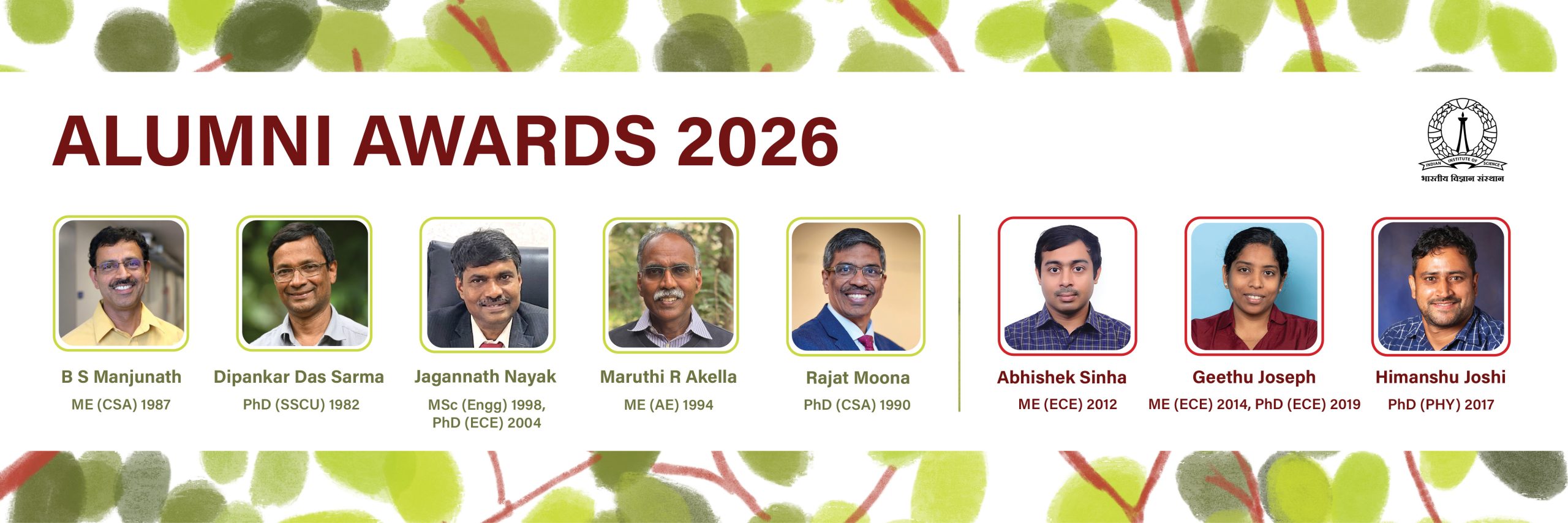
Talk Bytes by Young Alum Medal Winners 2026
10.00 – 12.00 PM | JN Tata Auditorium
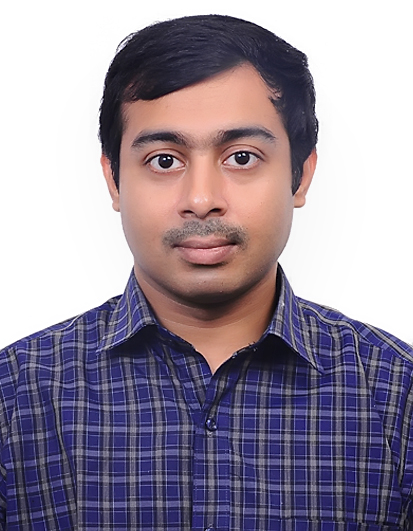
The Art of Making Hard Problems Easy, from Communication Networks to Machine Learning
by Abhishek Sinha
How can we make good decisions in a world that is constantly changing? Whether managing information flow across the Internet or designing intelligent systems, we face a common challenge: making the best possible decisions with limited resources. At first glance, such problems appear seemingly complex and unrelated. Yet, beneath the surface, they often share surprisingly similar mathematical structures. The key lies in finding the right perspective.
In this talk, I will share how a very simple mathematical idea can help unravel this complexity. Through two examples from my research, one involving communication networks and the other involving machine learning, I will illustrate how seemingly difficult problems can be relaxed to simpler, familiar problems for which we already have powerful tools. These reductions lead to efficient algorithms with rigorous performance guarantees. The most important step towards solving a complex problem is recognizing a simpler problem hiding in plain sight.
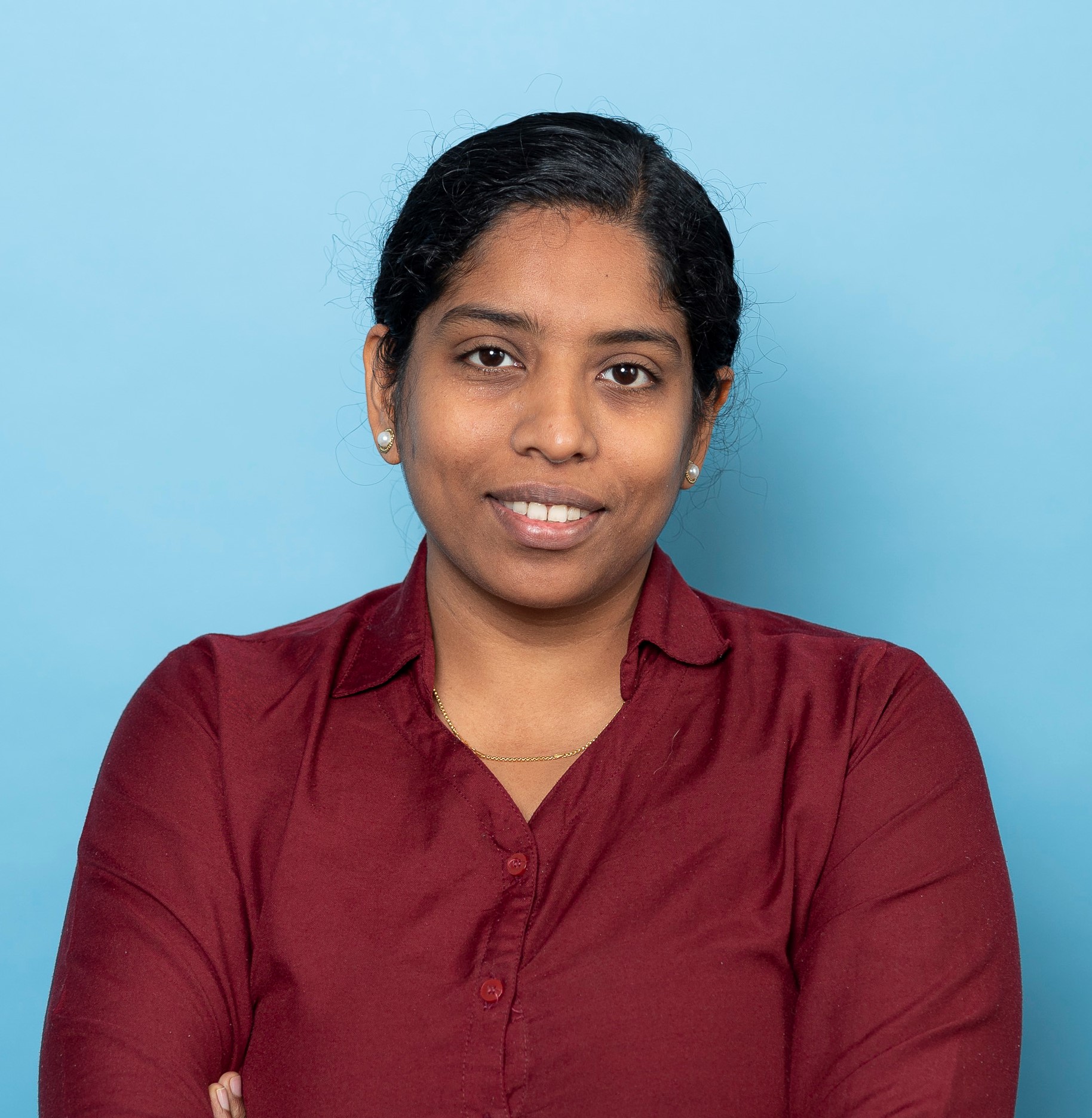
Doing More with Less: Sparsity for Efficient Sensing and Control
by Geethu Joseph
Modern technologies rely on sensors and control systems to collect information and make decisions. However, they often operate with limited measurements, communication bandwidth, energy and computing power. How can we make the best use of these resources without compromising performance? My research develops mathematical foundations and algorithms that exploit sparsity to make sensing and control more efficient.
In this talk, I will present three examples of this approach. First, in wireless channel estimation, I will show how exploiting multidimensional sparsity enables fast and accurate channel estimation with fewer pilot transmissions. Second, in automotive sensing, I will demonstrate how exploiting spatial sparsity in sensor data enables efficient mapping of a vehicle’s surroundings. Finally, in sparse control, I will discuss how exploiting sparsity can help determine when and where control actions are needed, reducing unnecessary actuation. Together, these examples demonstrate how mathematical insights and practical algorithms can help systems do more with less.
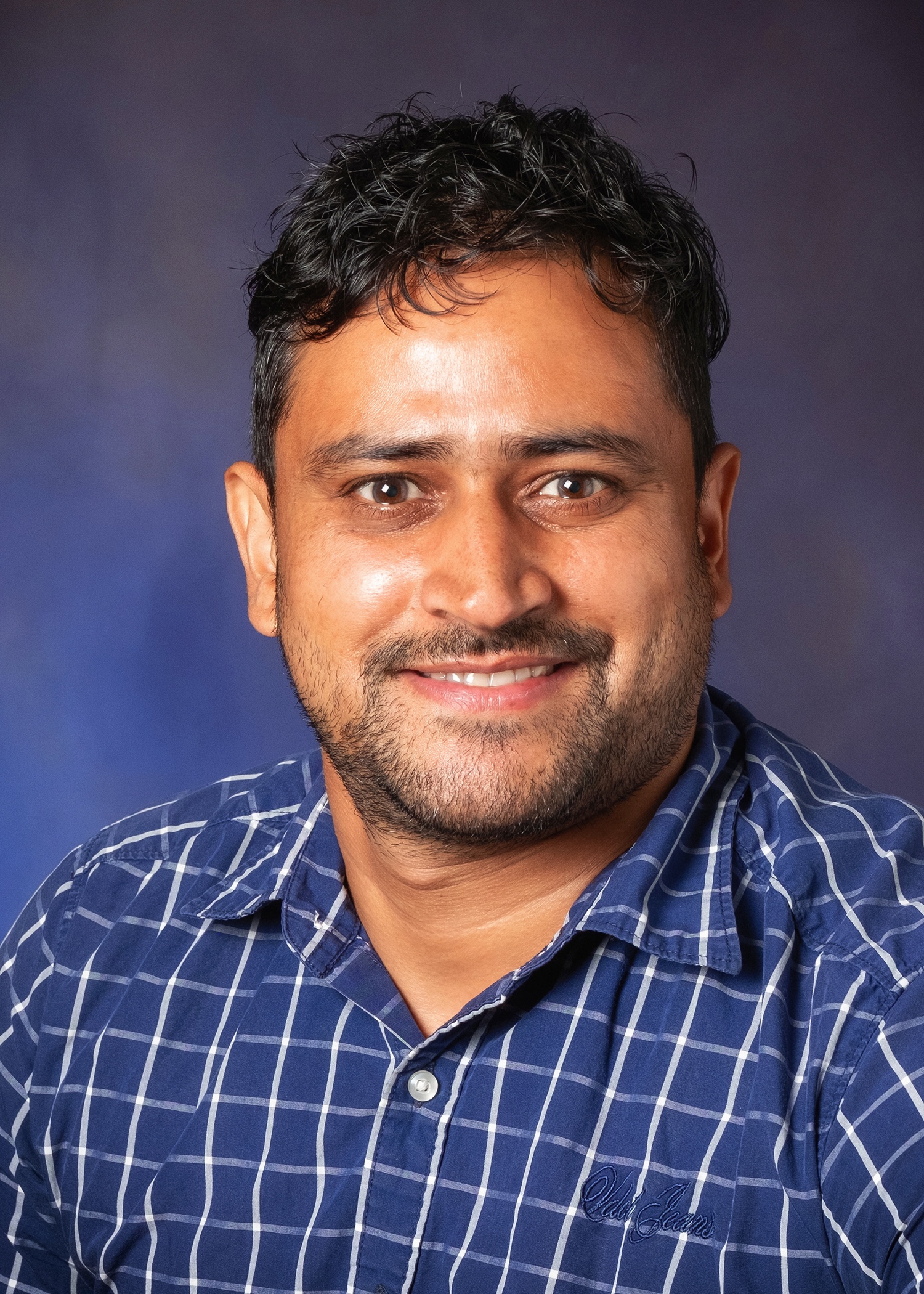
Imaging the molecular basis of life, health and disease using a computational microscope
by Himanshu Joshi
As Richard Feynman famously noted, living processes stem from the constant movements of atoms. However, visualizing molecules at atomic scales remains extremely challenging using standard optical microscopy. Advanced molecular dynamics simulations harness supercomputers to characterize biomolecular behavior at extremely small length and time nanoscales, helping us understand disease origins and rationally design effective and targeted therapeutic drugs.
Combining physics and chemistry informed algorithms with powerful supercomputers lets us trace atomic trajectories, building a metaphorical computational microscope. In this talk, I will present recent simulation studies from our research group at IIT Hyderabad. First, I will discuss the structural polymorphism and unfolding mechanisms of specific RNA repeats from the C9orf72 gene linked to ALS and dementia. Second, I will demonstrate molecular simulations characterizing glycerol permeation through aquaporin channel membranes. Finally, I will highlight designing functional nanostructures using biomolecules for sustainable technological applications like water desalination and advanced nanomedicine.
Tea Break
11.30 AM | JN Tata Auditorium
Reflections upon Engineering Your Career
12.00 – 1.00 PM | JN Tata Auditorium
Panel Discussion moderated by Deepa Srinivasan
Lunch
1.00 PM | JN Tata Auditorium
Director's address and other IISc Talks
2.00 – 3.00 PM | JN Tata Auditorium
Distinguished Alum Award and Young Alum Medal Ceremony
3.00 – 4.00 PM | JN Tata Auditorium
High Tea
4.00 PM | JN Tata Auditorium
20 December, Sunday
IISc Campus Walk
6.30 AM | Assemble at Main Building
Breakfast
8.30 AM | A Mess, IISc